
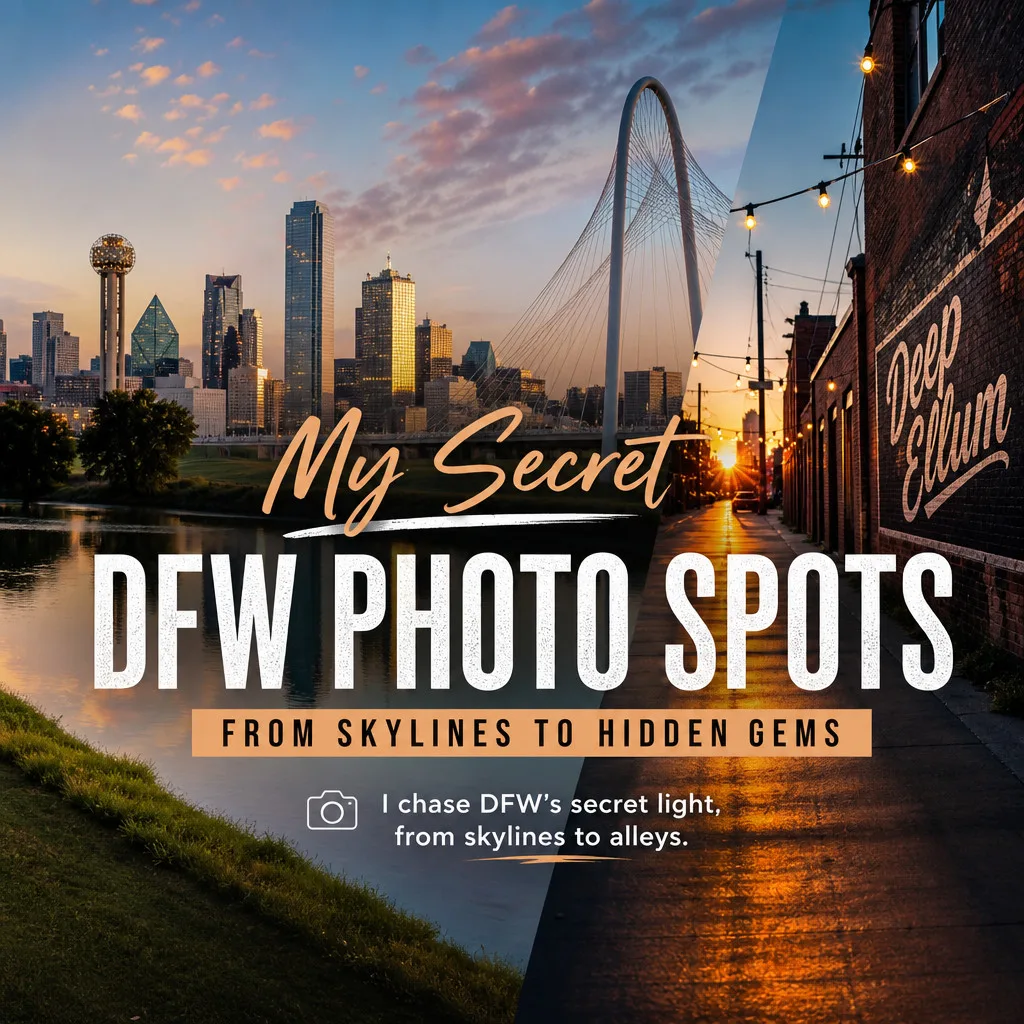
I have spent years photographing Dallas–Fort Worth in the in-between hours: before commuter traffic fills the streets, after restaurant patios empty, and during that brief North Texas glow when glass towers turn peach and limestone walls go honey-gold. These are the places I return to—not only the recognizable skylines, but quieter corners with neighborhood character, family-run food corridors, retro signage, gardens, lakes, and architecture that feels surprisingly cinematic. For ideas on turning those settings into more intentional people-focused images, see my guide to Dallas portrait photography. Quick filters: Dallas / Fort Worth / Carrollton / Plano · Styles: skyline, architecture, street, portraits, nature, night · Cost: free, low-cost, ticketed · Settings: outdoor, indoor, mixed. Access rules, photography policies, hours, construction, parking, and permit requirements can change quickly, so I have linked official sites where possible and always recommend confirming directly before a commercial shoot.
Dallas Icons I Shoot Before the City Wakes
Reunion Tower Overlook, Dallas — Urban / Skyline / Free / Outdoor: From the west side of downtown, Reunion Tower rises like a silver compass above rail lines, low warehouses, and the broad morning sky. Best subjects: skyline layers, passing DART trains, long-exposure traffic, and environmental portraits. Best light: blue hour through sunrise, when the tower is lit and the city is still quiet. Address/map: Reunion Tower. Parking, admission, permits: Street and paid-lot parking vary by block; the public observation deck is ticketed, while sidewalks and public rights-of-way are generally the practical option for exterior views. Check Reunion Tower’s visitor information for current deck access and policies. Accessibility and safety: Stay on sidewalks, avoid rail property, and work with a friend before dawn. Pro photo tip: Use a 70–200mm lens from a few blocks away to compress the tower against downtown’s layered buildings.
Margaret Hunt Hill Bridge and Trinity Skyline, Dallas — Architecture / Portraits / Free / Outdoor: The bridge’s white cable-stayed arch gives Dallas a clean, high-design silhouette that feels especially striking against a warm, stormy, or cloud-streaked Texas sky. Best subjects: graphic bridge lines, cyclists, wide skyline frames, and editorial portraits. Best light: sunrise for softer traffic and backlit cables; sunset works well when the west-facing sky has color. Address/map: Margaret Hunt Hill Bridge. Parking, admission, permits: Public street parking and nearby lots are available but can be limited; large productions, road closures, drones, and commercial setups may require City coordination. Start with the City of Dallas special events and filming resources. Accessibility and safety: Use marked pedestrian routes and never step into traffic lanes for a composition. Pro photo tip: A 16–35mm lens from the Trinity Groves side lets the cables sweep dramatically from the corners of the frame.
Klyde Warren Park and the Arts District, Dallas — Modern Architecture / Lifestyle / Free / Outdoor: This compact stretch between Uptown and downtown gives me glass towers, the Winspear Opera House, the Perot Museum, polished landscaping, and real city movement within a short walk. Best subjects: architectural symmetry, public life, polished portraits, and reflective surfaces after rain. Best light: early morning for clean architecture; blue hour for illuminated facades. Address/map: Klyde Warren Park. Parking, admission, permits: The park is free, but garages are paid; portrait sessions, tripods, lighting, and commercial work may be subject to park or venue approval. Review the Klyde Warren Park site and contact individual institutions for interior photography rules. Accessibility and safety: This is one of the city’s more accessible central areas, with paved paths and nearby garages. Pro photo tip: At the Winspear, shoot a centered 24–35mm composition and wait for one person to cross the frame for scale.
AT&T Discovery District and Main Street, Dallas — Night / Urban / Mixed Cost / Outdoor: The huge media façade, polished plazas, old storefronts, and nearby neon create a downtown frame that can feel futuristic without losing Dallas’s historic street grid. Best subjects: night portraits, reflections, signage, couples, and handheld street scenes. Best light: twilight through late evening, when ambient blue balances the screens and storefront lights. Address/map: AT&T Discovery District. Parking, admission, permits: Plaza access is generally public-facing, but events and private activations can affect availability; garages are paid and professional shoots may need permission. Check the district’s official site before planning. Accessibility and safety: Stick to active blocks, keep gear close, and avoid blocking pedestrian circulation. Pro photo tip: Bring a fast 35mm or 50mm lens and expose for the bright screens, letting the surrounding street fall into a rich, cinematic shadow.
Fort Worth Corners That Still Feel Like Secrets
T&P Station and Lancaster Avenue, Fort Worth — Historic Architecture / Portraits / Free / Outdoor: The grand T&P Station façade has the kind of old railway glamour that turns a simple portrait session into something editorial, especially when the morning light catches its stonework. Best subjects: architecture, fashion portraits, transit details, and symmetry. Best light: sunrise or late afternoon, when the façade gains depth without harsh overhead contrast. Address/map: T&P Station. Parking, admission, permits: Nearby paid parking and street parking are available; the building, rail platforms, and surrounding transportation areas have separate rules, so do not assume interior or platform photography is permitted. Check Trinity Metro for rail-property guidance. Accessibility and safety: Use public sidewalks and remain clear of rail operations. Pro photo tip: Stand across Lancaster with an 85mm lens to flatten the façade and isolate a subject against the station’s vertical geometry.
Fort Worth Water Gardens, Fort Worth — Minimalist / Architecture / Free / Outdoor: Concrete terraces, cascading water, and deep shadows make the Water Gardens one of the most visually unexpected spaces in North Texas. Best subjects: abstract geometry, silhouettes, couples, and long-exposure water studies. Best light: overcast mornings or the final hour before sunset, when contrast is easier to control. Address/map: Fort Worth Water Gardens. Parking, admission, permits: Entry is typically free, while downtown parking is generally paid; water features or sections may close for maintenance, and commercial photography may need approval. Check Visit Fort Worth and city notices before going. Accessibility and safety: Surfaces may be wet, stair-heavy, and uneven; follow all barriers and supervision signage. Pro photo tip: Use a 24mm lens from the upper edge, then place a subject in a bright color against the gray concrete for instant visual separation.
Near Southside and Magnolia Avenue, Fort Worth — Street / Food / Portraits / Free / Outdoor: Magnolia’s independent restaurants, old brick buildings, murals, patio lights, and neighborhood pace give me the lived-in Fort Worth images that polished downtown scenes cannot. Best subjects: candid street life, restaurant exteriors, neon, colorful walls, and casual editorial portraits. Best light: late afternoon into blue hour, especially on weekdays when you can work without crowded sidewalks. Address/map: Magnolia Avenue. Parking, admission, permits: Street parking is available but can fill during dining hours; always ask before photographing inside family-run restaurants or using their entrance as a set. Accessibility and safety: The corridor is walkable, though crossings and sidewalk conditions vary by block. Pro photo tip: Work with a 35mm lens and include a restaurant sign, passing pedestrian, and one foreground element to make portraits feel like a story rather than a backdrop.
Fort Worth Botanic Garden and Japanese Garden, Fort Worth — Nature / Portrait-Friendly / Ticketed / Outdoor: This is the closest I get locally to a composed, contemplative garden atmosphere: curved paths, lanterns, bridges, water, maples, and carefully framed views rather than an actual historic Edo-era setting. Best subjects: engagements, bridal details, garden landscapes, reflections, and quiet portraits. Best light: opening hour, spring bloom periods, or soft overcast afternoons. Address/map: Fort Worth Botanic Garden. Parking, admission, permits: Admission, parking, professional photography rules, and timed-entry requirements can vary; consult the Fort Worth Botanic Garden photography information before booking a shoot. Accessibility and safety: Main garden areas have maintained paths, but some scenic routes include slopes and steps. Pro photo tip: Use an 85mm at bridge level and shoot through foreground leaves to create a layered, intimate garden portrait.
Retro Streets and Old Arcades I Keep Coming Back To
Deep Ellum, Dallas — Murals / Music History / Night / Free / Outdoor: Deep Ellum is not a preserved Showa-era district, but its aging brick, hand-painted signs, music venues, murals, and neon offer the same kind of visual pleasure I chase in older entertainment quarters: texture, color, and stories in every block. Best subjects: murals, street portraits, band-style editorials, signage, and nighttime motion blur. Best light: weekday mornings for empty murals, or just after sunset for neon. Address/map: Deep Ellum. Parking, admission, permits: Lots and meters are paid in many areas; murals can change, businesses may restrict use of walls or entries, and organized commercial productions should obtain permission. See the Deep Ellum Foundation for district updates. Accessibility and safety: Stay aware after dark, particularly when carrying visible gear; avoid obstructing storefronts and residential entrances. Pro photo tip: Pair a 28mm lens with an off-camera flash at low power to keep mural color vivid while giving a subject crisp separation.
Bishop Arts District, Dallas — Vintage Storefronts / Portraits / Free / Outdoor: Bishop Arts is where I go for intimate storefront scale: tiled entrances, painted façades, café windows, theater signage, and alleyway glimpses that feel more personal than downtown. Best subjects: couples, fashion portraits, storefront details, food photography, and relaxed lifestyle frames. Best light: late afternoon, when side streets pick up warm reflected light, or blue hour for glowing shop windows. Address/map: Bishop Arts District. Parking, admission, permits: Paid and free parking options vary; ask business owners before staging shots in front of their doors, patios, or interiors. Visit Bishop Arts District for neighborhood information. Accessibility and safety: It is walkable, but sidewalks become busy on weekends. Pro photo tip: Use a 50mm lens at f/2 and frame through a storefront reflection to mix the subject with the neighborhood’s lettering and lights.
Koreatown Carrollton and Asia Times Square, Carrollton — Food Corridor / Night Color / Mixed Cost / Mixed Setting: For a DFW take on dense Asian shopping and dining corridors, I head to Carrollton—not because it is “authentic Edo,” which it is not, but because its bilingual signs, late-night restaurants, bakeries, karaoke spots, and family businesses create a richly layered contemporary street atmosphere. Best subjects: food details, signs, candid dining scenes with permission, night portraits, and storefront patterns. Best light: dusk through evening, when interiors glow against the parking-lot sky. Address/map: Asia Times Square. Parking, admission, permits: Parking is generally on-site; individual businesses set their own photography policies, and interior shooting should always be cleared with staff. Accessibility and safety: The center is accessible by paved lots and sidewalks, though vehicular traffic is active. Pro photo tip: Shoot at 35mm or 50mm, expose for bright signage, and let restaurant windows become warm background bokeh behind your subject.
Free Play Arcade, Dallas — Retro Interior / Neon / Paid / Indoor: A working arcade is one of my favorite substitutes for an old shopping-arcade mood: glowing cabinets, patterned carpet, retro game graphics, and saturated practical light that needs almost no styling. Best subjects: candid play, colorful portraits, detail shots of controls, and nostalgic date-night images. Best light: it is indoor light all the way—go when it is less crowded so the games become your background rather than visual clutter. Address/map: Free Play Dallas. Parking, admission, permits: Admission and hours are set by the venue; casual personal photography may differ from flash, tripods, brand campaigns, or commercial portrait sessions. Confirm directly through Free Play before bringing a full kit. Accessibility and safety: Indoor circulation can be tight during busy periods; protect drinks and gear around machines. Pro photo tip: Use a fast 35mm at ISO 800–3200, turn off direct flash, and use cabinet light as side light for a genuine neon-era look.
Golden-Hour Lakes, Gardens, and Quiet Backdrops
White Rock Lake and the Filter Building, Dallas — Nature / Skyline Hints / Free / Outdoor: White Rock Lake gives me open water, sailboats, long grasses, distant skyline fragments, and that huge North Texas sky that makes portraits breathe. Best subjects: runners, cyclists, couples, birds, water reflections, and sunset landscapes. Best light: sunrise for calm water and fewer people; sunset for warm backlight and bigger skies. Address/map: White Rock Lake. Parking, admission, permits: Park access is generally free, with lots around the lake; organized or commercial shoots may require a City of Dallas permit, especially when using extensive equipment. Review Dallas Park and Recreation guidance before a client session. Accessibility and safety: Paths are popular and mostly paved in key areas, but weather and low light can affect footing. Pro photo tip: Use a 70–200mm near the water’s edge at sunset to compress sailboats and distant color into a soft, layered frame.
Lakeside Park, Highland Park — Quiet Portraits / Free / Outdoor: Tucked among mature trees, creekside paths, stone bridges, and manicured lawns, Lakeside Park has a calm, residential elegance that feels far removed from the city center. Best subjects: families, maternity sessions, engagement portraits, seasonal foliage, and soft editorial fashion work. Best light: early morning or the last 90 minutes before sunset, when light filters through the trees. Address/map: Lakeside Park. Parking, admission, permits: Parking is limited on nearby streets; because this is a residential area, be discreet, respect neighbors, and check Town of Highland Park rules for commercial activity. Accessibility and safety: Some routes are paved, while creek edges and lawns can be uneven. Pro photo tip: Bring an 85mm or 105mm and use the bridges or tree trunks as soft framing elements rather than photographing every portrait wide open.
Dallas Arboretum and Botanical Garden, Dallas — Gardens / Floral / Ticketed / Outdoor: The Arboretum is the dependable choice when I need polished seasonal color, layered garden rooms, and lake views that feel intentional in camera. Best subjects: floral macro work, family portraits, engagement sessions, garden architecture, and spring or autumn editorials. Best light: morning entry, particularly in warmer months when the air is softer and crowds are lighter. Address/map: Dallas Arboretum. Parking, admission, permits: Timed tickets, parking, tripods, professional sessions, wedding photography, and styled shoots can have specific requirements; verify all details through the Dallas Arboretum before arriving. Accessibility and safety: Many primary paths are maintained and accessible, though the garden is large and can involve slopes. Pro photo tip: A 100mm macro is worth carrying for flowers, but my favorite frames often come from a 50mm portrait against a soft wall of blooms.
Trinity Trails and the Clearfork Area, Fort Worth — River / Modern Outdoors / Free / Outdoor: Along the Trinity River, the trails around Clearfork blend water, native planting, bridges, modern retail architecture, and broad skies in a way that feels distinctly contemporary Fort Worth. Best subjects: active lifestyle images, dogs, cyclists, water reflections, and golden-hour portraits. Best light: sunrise for misty calm, or sunset when the riverbank grass catches low light. Address/map: Trinity Trails Clearfork. Parking, admission, permits: Trail access is generally free, while nearby retail parking rules vary; commercial productions, drones, and large setups should be cleared with the relevant land manager. Check Trinity Trails for current trail information. Accessibility and safety: Choose marked paths, watch for cyclists, and avoid isolated sections after dark. Pro photo tip: At golden hour, shoot low with a 24–70mm and use tall grass in the foreground to make the river and sky feel more expansive.
My One-Day DFW Photo Routes, Lens Notes Included
My one-day Dallas route — Skyline / Street / Gardens / Mixed Cost: I start at Margaret Hunt Hill Bridge for sunrise, move to the Reunion Tower area for compressed skyline frames, then spend midmorning in the Arts District and Klyde Warren Park. After lunch, I photograph storefronts in Bishop Arts, save White Rock Lake or the Dallas Arboretum for golden hour, and end in Deep Ellum or the AT&T Discovery District for neon. Lens notes: bring 16–35mm for bridge and architecture, 35mm for street storytelling, 50mm or 85mm for portraits, and 70–200mm for skyline compression at the lake. Practical note: This route is easiest by car or rideshare; build in time for paid parking and confirm each venue’s photography rules before a client shoot.
My one-day Fort Worth route — Historic / Garden / River / Free and Ticketed: In Fort Worth, I begin at T&P Station for clean early architectural light, walk toward the Water Gardens before midday contrast becomes severe, then photograph café life and murals along Magnolia Avenue. In the afternoon, I book time at the Fort Worth Botanic Garden, and I finish around Trinity Trails/Clearfork for river light or downtown blue hour. Lens notes: a 24–70mm handles almost everything; add an 85mm for the garden and Magnolia portraits, plus a compact tripod only where it is clearly permitted. Practical note: The Botanic Garden is the most policy-sensitive stop on this route, so verify ticketing and professional-session requirements before promising it to a client.
My local rule for “secret” spots — Respect / Permission / Low Impact: DFW’s best hidden scenes are often not famous landmarks; they are restaurant alleys, side-street murals, neighborhood bakeries, aging shopping centers, and small businesses that locals rely on every day. I never treat these as disposable backdrops. Best subjects: texture, signage, food, street rhythm, and environmental portraiture—with consent where people are identifiable. Best timing: quieter weekday hours, when I can make images without disrupting business. Access note: Private lots, interiors, patios, alleys behind businesses, rail property, gated communities, and active construction areas are not automatically photography locations. Pro photo tip: A small camera body and a single 35mm lens usually create better neighborhood images—and a more respectful presence—than a large, attention-grabbing setup.
A compact planning checklist — All Cities / All Styles / All Budgets: Before leaving home, I save each map pin, check sunrise and sunset, pack water, charge batteries, and keep a rain cover in the car because North Texas weather can turn a clear frame into a dramatic one in minutes. For free outdoor locations, confirm parking and avoid blocking trails or sidewalks. For ticketed gardens and indoor arcades, reserve or call ahead. For commercial work, drones, tripods, lighting, or large crews, contact the property owner, city, or venue in writing rather than relying on an old social-media post. Pro photo tip: Build each day around three anchor images—a sunrise wide shot, a midday detail or portrait, and a blue-hour scene—so the final gallery feels intentional rather than like a collection of pins on a map.
The DFW photographs I value most are never only about proving I was at a famous place. They come from noticing how morning light lands on Reunion Tower, how a Carrollton restaurant window glows at dusk, how a garden path frames a quiet portrait, or how an old Deep Ellum sign changes character after rain. Start with the iconic stops, then give yourself permission to wander slowly, ask before photographing private spaces, and let North Texas reveal its more intimate visual language one block at a time.